Solar Sales Process, Challenges & Solutions

Selling solar is different from regular products because a customer follows a process: they ask questions about investment, savings, installation, maintenance, government incentives, electricity bills and, most importantly, whether solar will actually work for their property or not. That’s why a strong sales process is more important than a salesperson making calls. It always requires the right information at the right time, quick follow-ups, accurate proposals and a system that keeps every lead moving.
Solar business owners face many challenges, but no need to worry, because in this comprehensive guide, we are going to discuss solar sales processes, challenges and solutions. We will discuss everything in brief like how your solar sales process works, where business exactly struggles and what can be done to make the entire journey smoother.

What is the Solar Sales Process?
The solar sales process is the entire journey a potential customer goes through, from the moment they enquire about solar to the point where they purchase, install or start using a solar energy system.
It is different from selling a simple product; solar sales involve multiple processes, including consultation, pricing discussion, financing, and several follow-ups. Before investing in solar, customers always want to understand how much they need to invest, how much they can save, what system is right for them and how long it will take to recover the investment.
What are the Steps of the Solar Sales Process?
A well-defined solar sales process is essential for keeping prospects engaged and helping the sales team convert genuine enquiries into customers. Some key steps of the sales process for solar businesses:
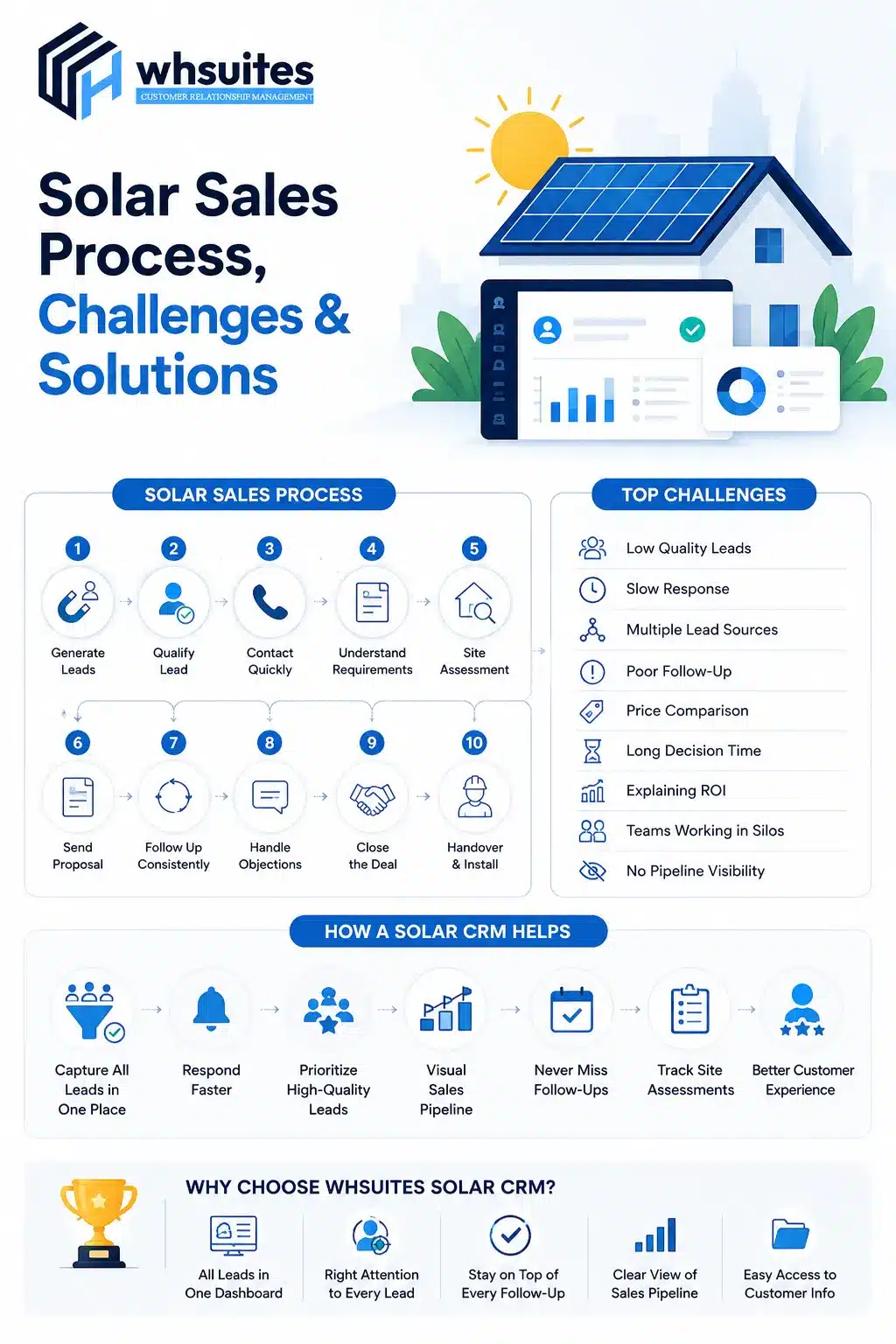
- Generate & Capture Solar Leads: The process begins with attracting potential customers through channels such as Google Ads and SEO, social media, referrals, solar marketplaces and landing pages.
- Qualify the Lead: Not every query comes with buying intent. The sales team first identifies whether the prospect has a genuine requirement, a suitable property or the right timeline for installation.
- Contact the Prospects Quickly: Speed plays a crucial role in solar sales. Once a lead comes in, contacting the prospect quickly can make the difference between winning and losing the opportunity.
- Understand Customer’s Solar Requirements: At this step, the salesperson should understand the customer’s solar requirements, like electricity consumption, monthly bills, property type, available roof space and expectations.
- Conduct a Site Assessment: Once the requirement understanding is complete, the salesperson should conduct a site assessment that helps determine whether the proposed solar installation is practical.
- Prepare a Personalized Solar Proposal: Now, the salesperson can prepare a custom proposal. It may include recommended system size, expected energy generation, equipment details, estimated investment and estimated payback period.
- Follow Up Consistently: Most solar prospects don’t decide after the first conversation. With consistent and well-timed follow-ups, you can keep the opportunity active without making the customer feel pressured.
- Handle Questions & Objections: Customers have multiple concerns about installation costs, maintenance, warranties, system performance or return on investment. The sales team needs to address all these concerns with clear & honest information.
- Negotiate & Close the Deal: Once the customer is comfortable with the solution, the salesperson starts discussing pricing, payment terms, financing, installation timelines, warranties and other final details.
- Handover to the Installation Team: Once you close the deal is not the end of the customer journey. Salespeople need to hand over all the important information to the installation and operations teams.
What are the Biggest Challenges in the Solar Sales Process?
- Getting Leads That Are Actually Worth Pursuing
- Responding Too Late to New Enquiries
- Managing Leads from Multiple Sources
- Losing Leads Because of Poor Follow-Up
- Customer Comparing Only on Price
- Customer Taking Too Long to Make a Decision
- Difficulty Explaining Solar ROI
- Sales & Technical Teams Working in Silos
- No Clear Visibility into the Sales Pipeline
Check: Beginner’s Guide to Solar CRM
How a Solar CRM can Improve the Sales Process?
A solar CRM brings all these activities into one centralized system that means it is very helpful for solar companies. Let’s see how it improves the sales process:
Capture Every Solar Lead in One Place
Solar companies receive enquiries from multiple sources, and managing them all separately results in some being overlooked. With the help of solar CRM, you can store all lead information in one place. The sales team can see the prospect’s name, contact details, lead source, location, requirements and current status without searching through different platforms.
Respond to New Leads Faster
If the sales team takes too long to respond, a good solar lead can lose its value. Solar CRM helps you assign leads to the right salesperson, and notifications can be triggered as soon as an enquiry arrives. With this, a salesperson can immediately view the customer’s details and make the first call or send a message.
Automatically Prioritize High-Quality Leads
Not every person who fills the enquiry form is ready to purchase. Some may only be researching price while others may already have clear requirements. A Solar CRM helps your sales team categorize and prioritize leads using information such as location, property type, electricity consumption, project size, budget and buying intent.
Keep the Entire Sales Pipeline Visible
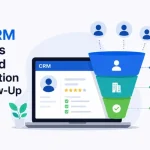
When salespeople manage leads manually through spreadsheets, it can be difficult to understand exactly where each prospect stands. One lead may be waiting for a site visit while another may have received a proposal. Special solar CRM provides a visual sales pipeline where teams can track these stages clearly.
Never Miss a Follow-Up
In the solar business, one conversation is not enough to close a deal. Customers may need time to compare quotations, discuss the investment with their family, arrange financing or understand available incentives. A solar CRM can help you schedule follow-up tasks and reminders based on the sales stage.
Also Check: How to Increase Solar Business Sales with CRM
Track Site Assessments & Customer Requirements
Site assessment is the most important stage in solar sales because the final deal depends on the consumer’s property & energy requirements. Sales teams may need to store every single conversation with clients. A solar CRM allows this information to be stored along with the customer’s lead profile.
Why Choose WHSuites Solar CRM?
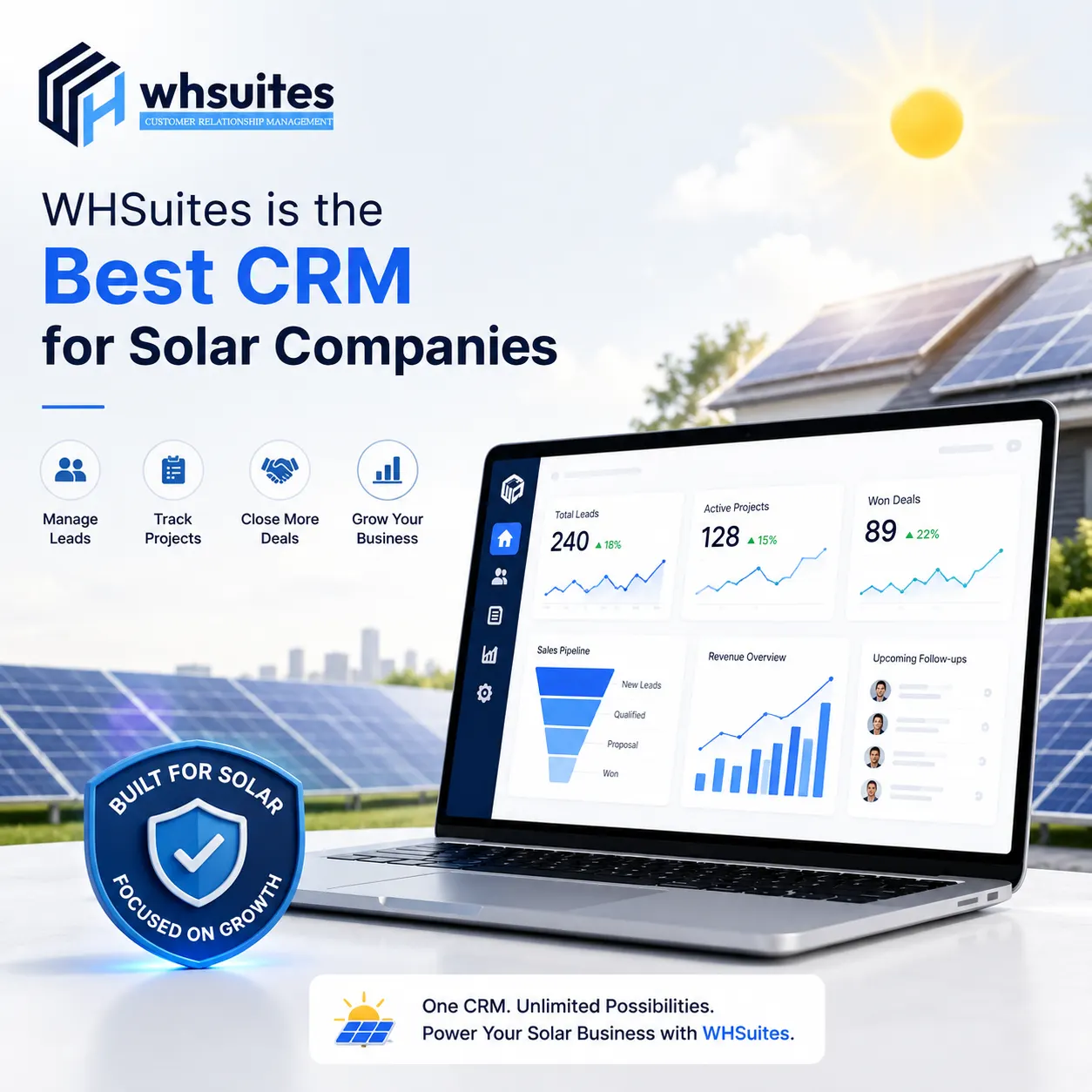
WHSuites Solar CRM is specially designed to bring lead management, sales tracking, follow-ups, customer communication and team activities together in one place. Some reasons to choose WHSuites CRM:
- Manage your solar leads from one dashboard
- Give every lead the right attention
- Stay on top of every follow-up
- Get a clear view of your sales pipeline
- Keep customer information easily accessible
- Improve team coordination
Don’t Forget to Check: Things to Consider While Choosing a Solar CRM
Frequently Asked Questions about Solar Sales Process, Challenges & Solutions
Question. Which challenge is biggest in the solar sales process?
Answer: In the solar sales process, the biggest challenge is often managing and converting leads effectively. As we know, solar companies receive inquiries from multiple channels but delayed follow-ups, poor lead qualification, missed site visits and scattered customer data can cause valuable prospects.
Question. How can your CRM manage follow-ups effectively?
Answer: A solar CRM can automate follow-up reminders, schedule calls, send notifications and track previous conversations in one place. With this, your sales team can see which leads need attention & when, helping them stay consistent without relying on spreadsheets or manual reminders.
Question. What mistakes should I avoid while choosing a CRM for solar companies?
Answer: If a CRM has a long list of features and you simply choose it. This is one of the biggest mistakes you should avoid while choosing a CRM for solar companies.
Question. How can solar companies manage site visits and installations?
Answer: A CRM can help solar companies schedule site visits, assign tasks to team members, record site survey details, track installation progress & keep customer information accessible to the right teams.
Question. How can we generate better quality leads with a CRM?
Answer: For generating better quality leads, CRM helps you understand which lead sources and customer profiles bring the best opportunities.
Question. What should a solar sales pipeline include?
Answer: A solar sales pipeline must include common stages such as new lead, contacted, qualified, site visit scheduled, site survey completed, quotation sent, negotiation & won/lost.
Question. How does a CRM identify the most valuable lead for solar companies?
Answer: A CRM uses lead scoring criteria like location, property type, energy requirements, budget, engagement level, lead source and buying intent to prioritize prospects.