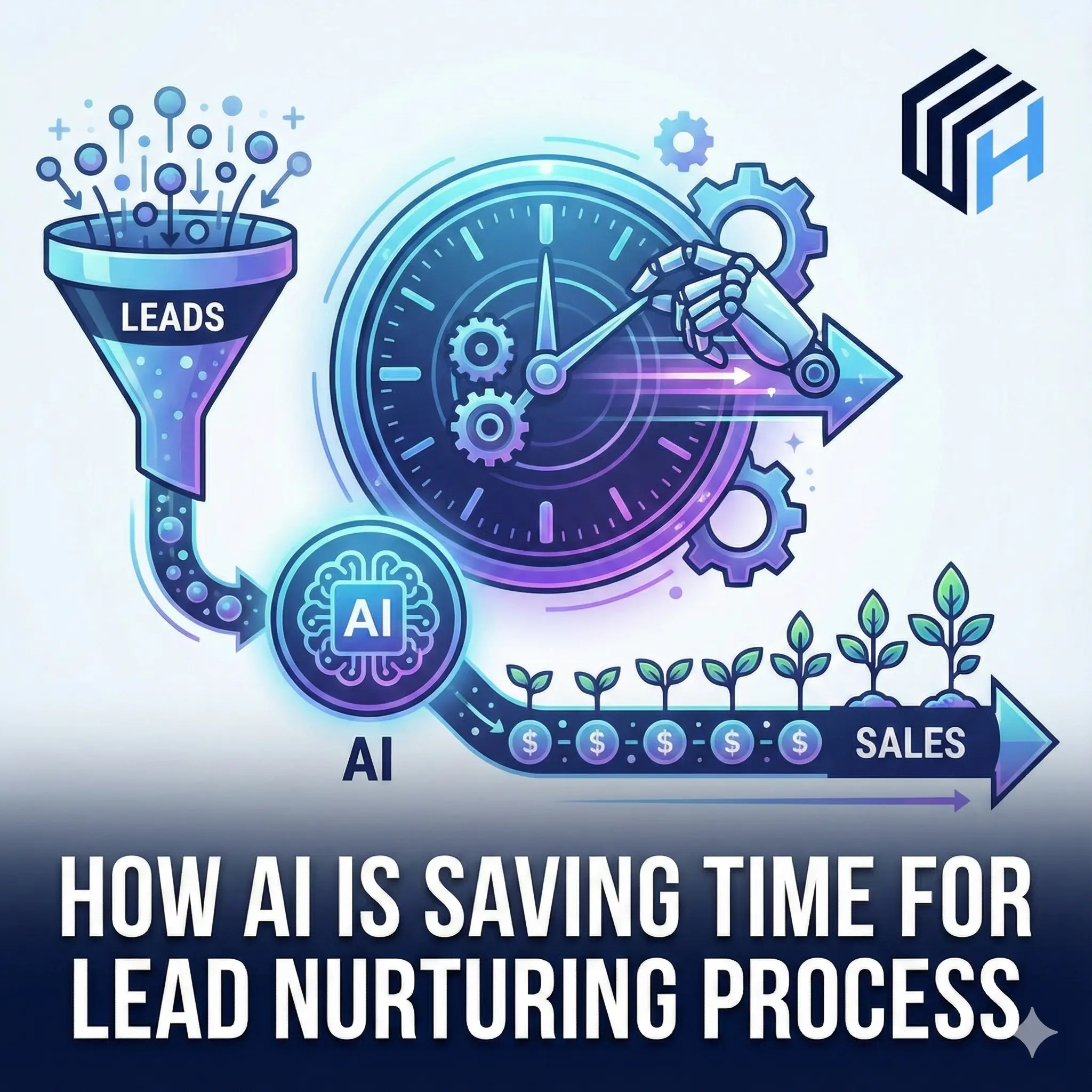
In B2B sales, all those numerous micro-decisions–from the first lead you chase to what you’ll share and when to touch base next-lie at the heart of the divide between opportunity and revenue generation. Botch even one of them, and an otherwise high-intent prospect is likely lost forever. That’s the case: B2B lead qualification CRM tools have established themselves at the core of the sales workflow. By integrating automated workflows, organised follow-up campaigns, and automated lead scoring, CRM technology transitions prospect nurturing from guesswork into a replicable.
In this blog, we’ll look at how B2B sales CRM software can streamline lead qualification and follow-up and how a comprehensive solution such as WHSuites offers all of these functions from a single dashboard.
Why Lead Qualification and Follow-Up Are Key to B2B Sales
B2B purchase cycles are much longer and more complicated than B2C ones; involving not only many decision makers, higher price points, and longer periods for research, it is not efficient or practical for sales reps to work every lead in the same way. Without some form of lead qualification process, sales reps waste valuable time talking to and following up with prospects who never intended to purchase. Meanwhile, their qualified leads who are highly interested go cold due to neglected follow-up.
B2B lead management can be divided into two mutually complementary components:
Qualification- determining which leads are truly worth pursuing, based on both a prospect’s qualification status (BANT, for example) and intent and budget.
Follow-up- proactively engaging qualified leads on a regular and optimised basis to advance them through the sales pipeline. A CRM is the perfect system for these aspects, instead of outdated sticky notes and spreadsheets.
Ways CRM Software Helps with Lead Qualification
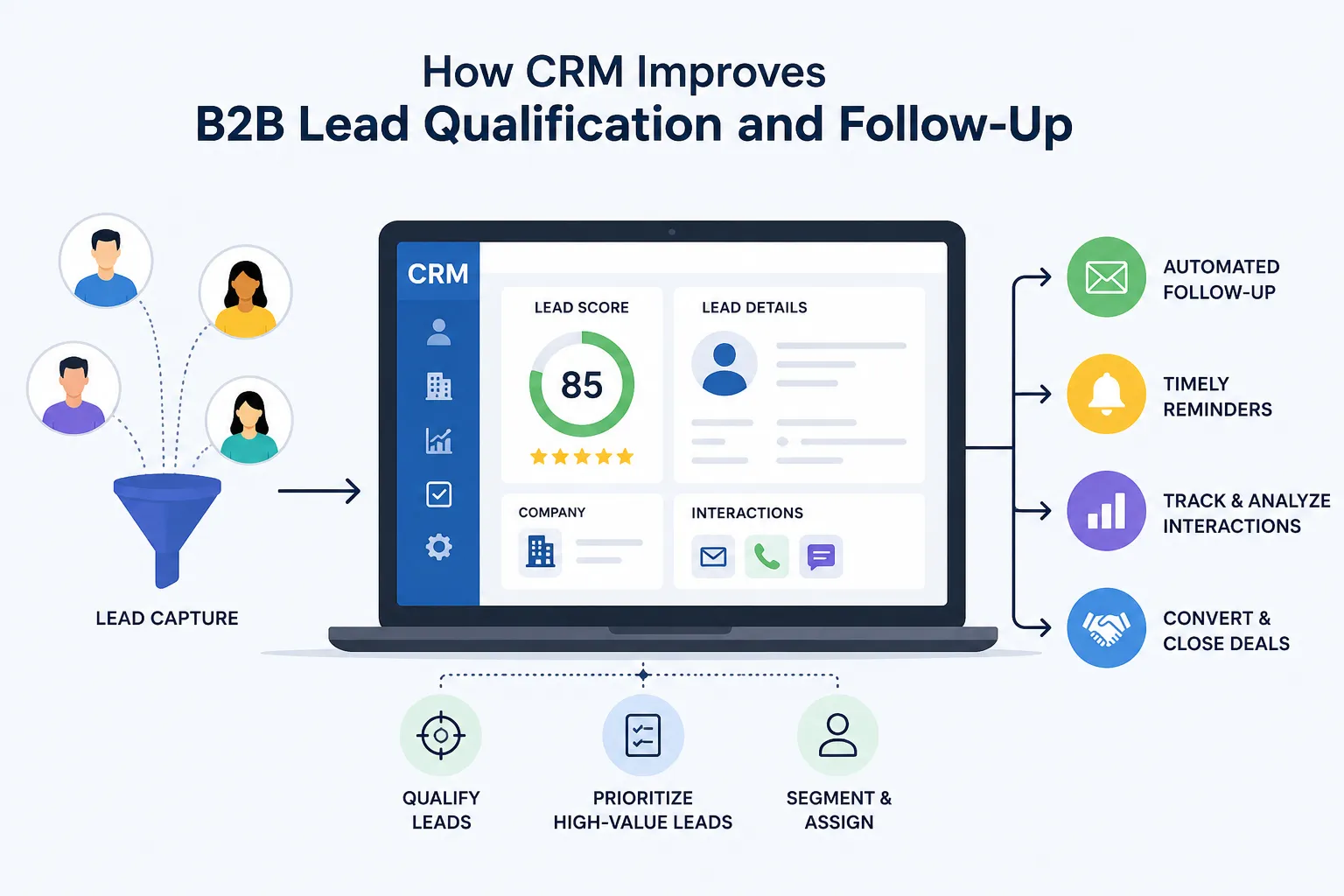
1. Capture Leads from Everywhere into One Place.
The biggest lead qualification roadblock is dispersed information. Leads come in from your site, portals (like for a given industry), paid ads, phone calls and references.
A quality CRM brings all leads into one easy-to-view and analyse platform and into the hands of your lead generation and sales teams.
Our CRM from WHSuites easily and efficiently capture from as sources likeIndiainfoor business search sites, so nothing goes unaccounted for.
2. Lead Scoring to Determine Interest for Qualified Leads
Lead Scoring is a primary qualification method.CRM software provides automatic scoring on a lead for firmographic factors including job title, industry, company size, purchasing power, as well as by identifying behavioural patterns. These scoring systems can immediately give sales team members and lead management professionals insight to differentiate between qualified leads and leads to nurture further by saving valuable resources of calling upon leads that do not or cannot do business.
The best CRMs provide the opportunity to add custom fields based on qualification frameworks like BANT (Budget, Authority, Need, Timeline) or CHAMP (Challenges, Authority, Money, Prioritisation). Documenting lead qualification data at the first touch point allows for automated segmentation and filtering, rather than individual judgment calls by each rep.
4. Duplicate & Junk Lead Identification
Duplicate lead entry skews reporting and can lead to duplicate outreaches (or wasted time). Integrated duplicate identification (supported in WHSuites CRM) will catch recurring leads when multiple sources funnel into the same pipeline.
5. Lead Source tracking & Attribution
Identifying which channel produced a lead, beyond simply which source to pull from, can provide data about campaign effectiveness, portal activity, or the effectiveness of referrals. With lead source tracking capabilities, your team will know exactly where leads are coming from.
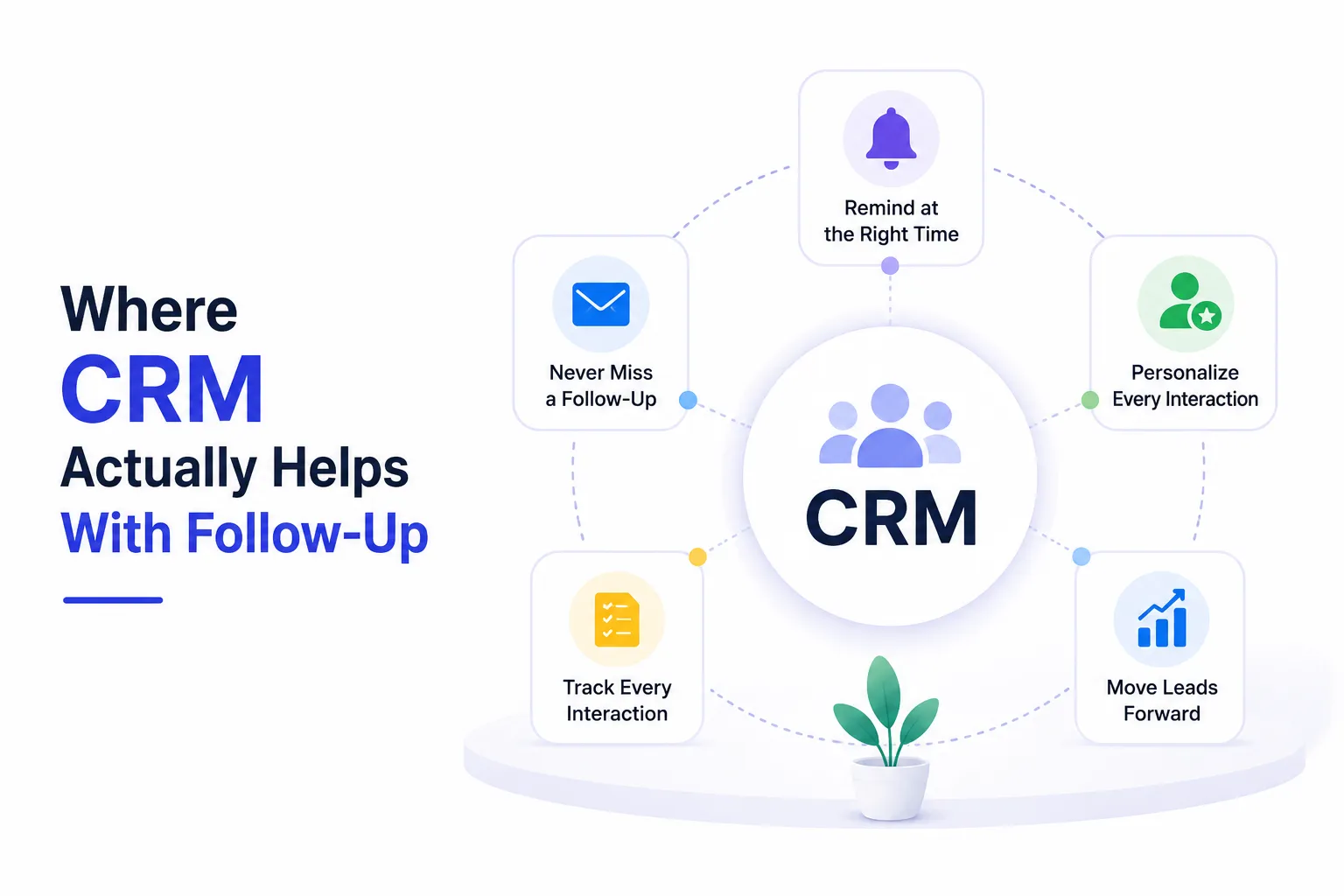
Where CRM Actually Helps With Follow-Up
Reminders That Don’t Rely on Memories
Automated reminders, not memory. Take any sales manager and ask them what kills the most deals. It isn’t the rejection; it is simply silence. Sales reps get caught up; they remember to follow up next Thursday, and two weeks later, after they finally remembered, the lead is already working elsewhere.
Automating CRM tasks for follow-up helps ensure a missed communication doesn’t result in a missed deal with a suite of follow-up tools (emails, SMS, and WhatsApp messages, all working in a single system – so reps won’t have to deal with opening up multiple apps each time).
Turn “I’ll Call them” into an Actual Task
From intention to scheduled appointment, when ‘I’ll follow up later’ is now on your desk to be reviewed and followed up with by its due date – it feels very different. When CRM makes a follow-up, a documented task rather than just a thought. This works great, especially as leads are handed from marketing to the sales teams or by one sales rep to the next.
Knowing What’s Already Been Discussed
There’s nothing that quenches a prospect’s interest quicker than a salesperson who obviously doesn’t remember the last conversation they had. CRMs keep a record of every call, email, and chat relating to the lead so whoever contacts the prospect to follow up – even if they’re not the original sales rep – knows exactly what they’re getting into before picking up the phone.
Being Alerted at the Right Time
Some CRMs will notify a sales rep the instant that a lead reopens a proposal email or revisits your pricing page on the website. These are usually the golden opportunities to call the lead, and the window doesn’t stay open for long. It’s an immediate alert that turns a “we’ll check in later” into a “we’ll call them right now while we’re fresh in their minds.”
Viewing the Entire Pipeline
Seeing a visual pipeline – new, contacted, qualified, negotiating, closed – that displays which opportunities have stagnated at certain stages makes it incredibly obvious when a lead has been languishing in the same one for two weeks without any progress being made. This immediately highlights where your manager needs to intervene, and this can only be easily managed when the pipeline is readily accessible on a single screen, rather than scattered across dozens of inboxes.
Ensuring Field Sales Honesty
When you’ve got field sales reps, especially sales execs meeting your clients in the field, you’ll inevitably create a division between what’s on paper and what reality shows. So, WHSuites, for its part, integrates location tracking for the sales execs, so they will know if the trip occurred, not just if it says “Done” on the sheet.
How Does this Actually Change the Game for Your Team?
You’ve probably come to realise that, sooner or later, such an implemented system on qualification and follow-ups can reflect the transformation. For example, there’s more efficient use of time as reps are more likely to avoid pursuing lost leads; and, conversely, a higher conversion rate as a result.
Follow-ups won’t have to linger in the inbox of the rep for as long as a whole week, thus enabling faster completion of deals. Your reps would eventually be less occupied in tasks of doing admin work and spend more time closing deals. And forecasting will be truthful with concrete stages and metrics. These won’t sound like fantasies – in fact, CRM implementation alone, if correctly used as it is intended, is proven to be worthwhile over and over again.
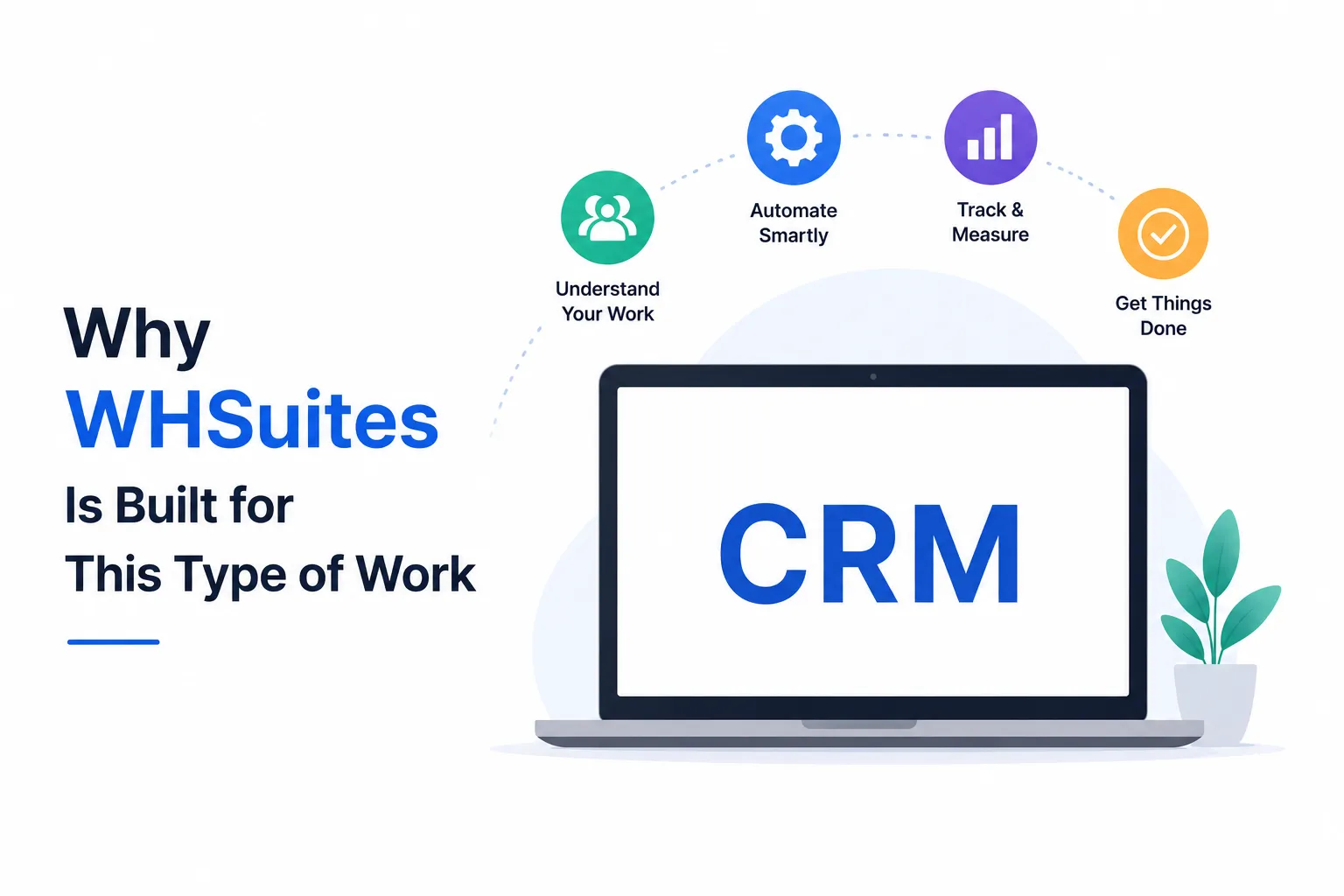
Why WHSuites Is Built for This Type of Work
WHSuites was designed from the ground up for this exact scenario – a B2B team trying to manage leads coming in from dozens of sources, without any standardised process to qualify them or make sure they were followed up on. The tool consolidates lead capture from different portals, finds duplicates, tracks sources, allows you to assign and schedule tasks (with calendar reminders), and offers multi-channel automation for emails, texts, and WhatsApp, all from one central place. You can also get location tracking for field sales reps and robust reporting – a pretty comprehensive solution for a growing sales team without having them pull five different services together.
Final Thoughts
Better lead follow-up and qualification isn’t about asking your team to work harder or hiring more people – it’s about giving them a system that doesn’t lose things, treats leads differently, and consistently makes clear what the next move should be.
A CRM is the workhorse of that system – and for those still living in a world of spreadsheets and memory, something like WHSuites can bridge the gap with less effort than you’d imagine.
Frequently Asked Questions for How CRM Improves B2B Lead Qualification:
1. What is B2B lead qualification?
B2B lead qualification is an approach that helps determine if prospects are likely to turn into a customer. Leads are evaluated based on fit, budget, authority, and intent.
2. How does CRM help with lead scoring?
A CRM will take the place of manual scoring of your leads based on the firmographic and behavioural data you have-like size of company, how many times they’ve visited your website, how often they open your emails. This takes guesswork away and allows reps to focus on the most sales-ready leads first.
3. What’s the difference between a CRM and lead management software?
A CRM is software that is used to manage the entire customer life cycle-all the way from after-sales support-while lead management software only tracks lead scoring, nurturing and capturing. Many solutions, like WHSuites, offer both.
4. Can a CRM system automate follow-up emails?
Yes, most CRMs, like WHSuites, can use automated email, SMS, and even WhatsApp sequences based on the lead’s actions or time.
5. How does CRM prevent duplicate leads?
CRM uses matching logic that will trigger when a new lead comes from several different sources using rules based on your unique criteria: email address, telephone number, company name, etc. CRM system helps prevent sending out the same email or making the same phone call twice.
6. What is BANT in lead qualification?
BANT – budget, authority, need, and timeline – is a method that many businesses use to gauge if leads are a viable opportunity. CRM solutions help teams to log these data points as custom fields to keep each contact’s information unified and organised.
7. How does CRM assist B2B sales pipeline visibility?
CRM provides visibility into how each lead progressed from the time it came in the door to finally being converted to closed/won with sales opportunity reporting. Sales managers can easily identify if leads are stalled, and they can get assistance in moving leads down the pipe.
8. Does WHSuites work for small B2B companies?
WHSuites provides CRM and lead management capabilities for smaller, evolving companies who are just now developing a systematic approach to B2B customer management. We offer auto lead captures, task assignment and multi-channel marketing support all without a big commitment to a large IT team or complicated set-up.