
When we sell to any individual, it is easy, but selling to another business is very difficult because it can take weeks or even months. Even a single B2B sale involves multiple steps such as product demonstration, budget approvals, multiple meetings and negotiation, which can lead to unanswered follow-ups, delayed mails and poor communication. This is where B2B businesses choose a CRM that makes a real difference.
With a well-designed and fully functional CRM, B2B companies can keep all their business sales conversations, tasks and opportunities organized. It allows the sales team to focus more on closing deals instead of just chasing information. So, if you are also planning to adopt a CRM for B2B business, this detailed B2B CRM guide is only for you.
Reasons for B2B Sales Cycles So Long
There is a big difference between a single customer buying for themselves and a business buying to sell to a customer. A lot of factors make the B2B sales cycle longer, including:
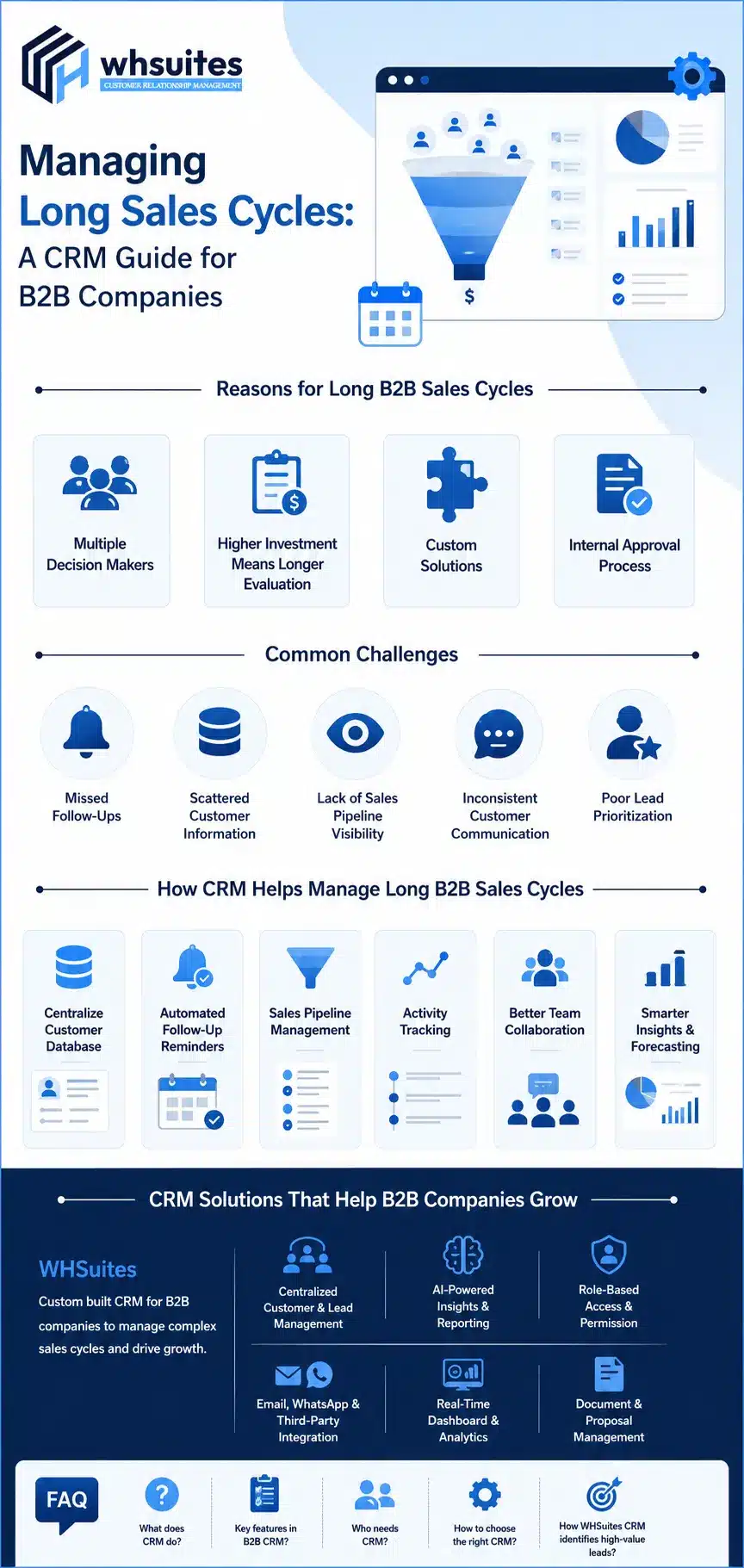
- Multiple Decision Makers: B2B is a large concept where buying decisions are rarely made by one person. It goes through a process like finance team review budget, IT checks technical capability, procurement negotiates pricing, legal examines contracts and then senior management gives the final approval. That’s why it is called a long sales cycle.
- Higher Investment Means Longer Evaluation: B2B business purchase involves significant investment, which is why they don’t make decisions overnight. Before investing in anything. They carefully compare different vendors, evaluate pricing, request product demonstration, and assess long term value, support and return on investment.
- Custom Solutions: Many B2B solutions are customized to meet the specific needs and requirements of each business, and generic solutions can’t work for them anymore. That’s why businesses need to request custom features, integration with existing software, personalized workflows, industry-specific functionality or flexible pricing models.
- Internal Approval Process: If a business owner praises your product or service, that doesn’t always mean they will buy from you because every B2B business mostly carries a long internal approval process. It includes different stakeholders like department heads, finance teams, legal departments, and senior management.
Common Challenges Most B2B Businesses Face During a Long Sales Cycle
B2B is one of the most challenging businesses where a single closing deal takes a lot of time and faces many challenges, such as:
- Missed Follow-Ups: One of the biggest challenges in B2B is staying consistent with follow-ups. A single prospect may request a proposal today but schedule a product next week and even take time to discuss the offer with their team. Due to so many conversations happening at once, it is easy for a follow-up to be delayed or forgotten.
- Scattered Customer Information: Many businesses still manage their data across spreadsheets, mails and WhatsApp conversations. Due to important data stored in different places, it becomes difficult to find the right information at the right time, which often leads to missed updates, duplicate efforts, delayed responses and inconsistent customer experience.
- Lack of Sales Pipeline Visibility: Due to several deals being in progress at the same time, keeping track of each one can become more difficult than ever. This is not able to give a clear sales pipeline that results in missing opportunities, delaying follow-ups and struggling to close deals more efficiently.
- Inconsistent Customer Communication: When sales teams interact with customers, they need complete information, and they don’t have enough time to gather information from different platforms. This is where a Custom CRM works to gather all the information into one centralized platform.
- Poor Lead Prioritization: The buying journey has different stages, as some prospects are ready to request a proposal while others are still researching solutions or comparing vendors. Without clear information or a pipeline, the sales team may be confused and spend too much effort on low-potential prospects.
How CRM Helps Manage Long B2B Sales Cycles?
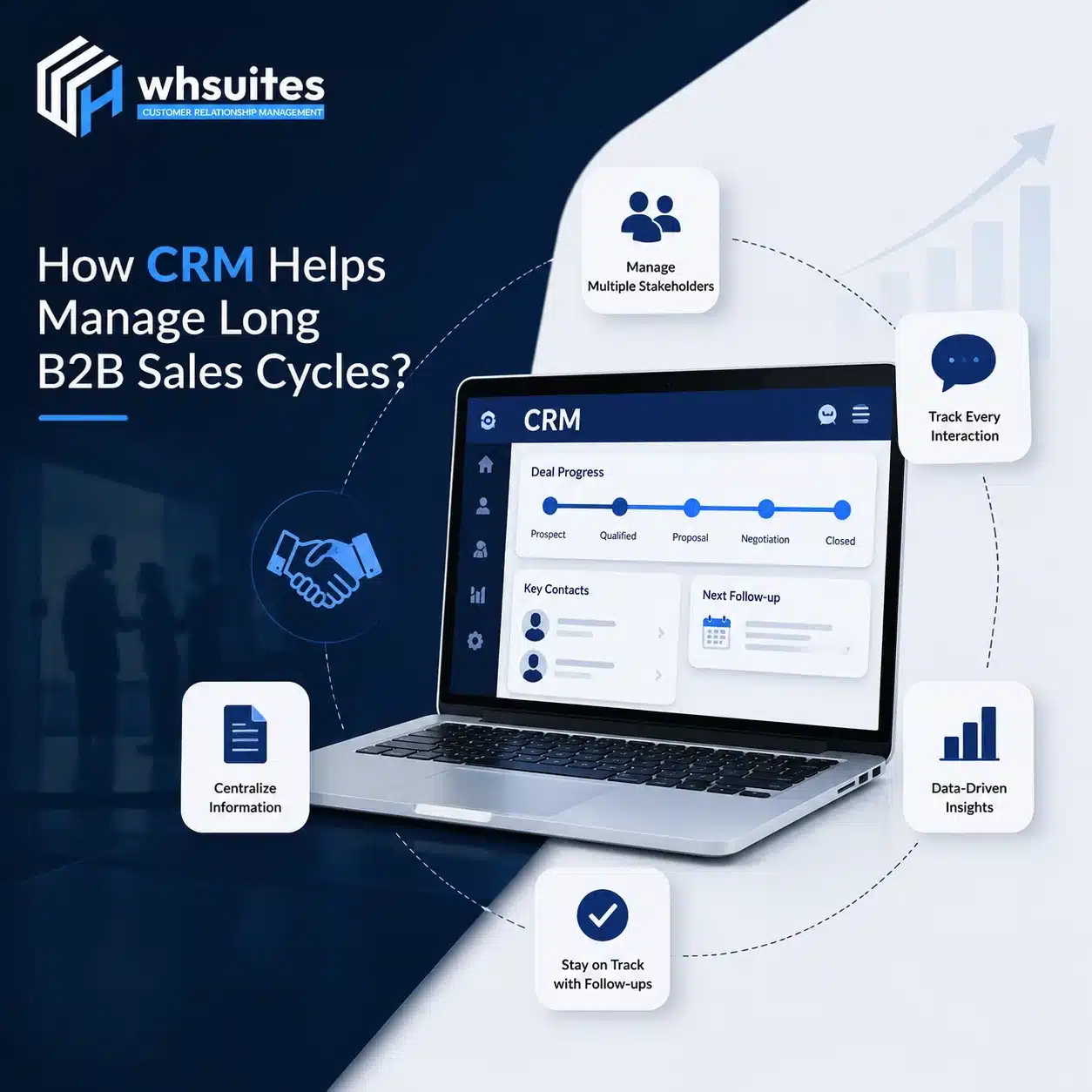
Let’s see how a CRM helps businesses manage a complex and lengthy B2B sales cycle:
Centralize Customer Database
One of the most significant advantages of using a CRM is that it helps you keep all the customer information in one centralized place. Now, you don’t need to switch between spreadsheets, emails or different communication platforms; your sales team can directly access everything they need from CRM software.
You can quickly access:
- Contact details
- Company information
- Call history
- Meeting notes
- Contacts & important documents
- Email conversations
- Proposals and quotations
Due to having all customer data in one place, team members don’t need to waste time searching through emails or spreadsheets.
Automated Follow-Up Reminders
Consistent follow-up is really important when it comes to closing B2B deals. This long cycle leads to important follow-ups to be forgotten. With smarter CRM, you can automatically schedule reminders for upcoming tasks such as:
- Follow-ups
- Product demos
- Client meetings
- Payment reminders
Custom CRM allows your team to receive on time notification and ensure every lead is nurtured throughout the buying journey.
Sales Pipeline Management
With the help of smart CRM, you can see every opportunity in your sales pipeline. Whether you are a sales representative or manager, you can instantly see where each lead is in the buying journey and what actions are needed to move deals forward.
It includes:
- New lead
- Qualified lead
- Product demo
- Discovery call
- Proposal sent
- Contract review
- Closed won
- Closed lost
With CRM, you can forecast revenue more accurately and keep the entire sales process organized.
Activity Tracking
B2B companies have a long sales cycle that makes tracking of every call, meeting and follow up becomes challenging. A smart custom CRM automatically logs all the customer activities, which allows the sales team to view the complete timeline of interactions.
- Calls Made
- Emails sent
- Meetings completed
- Pending tasks
- Customer responses
- Sales progress
CRM allows you to complete tracking, businesses improve accountability and gain valuable insights into the effectiveness of their sales efforts.
Better Team Collaboration
A long B2B sales cycle is no longer limited to one department; it often involves multiple departments such as sales, marketing, customer support, finance and management. With a well-designed CRM, you can create a shared workspace where every team member has access to the latest interaction history.
With the performance-focused CRM, your teams can:
- Access a complete history of customer interactions from one place
- Track the current status of every lead & sales opportunity
- Receive real-time updates whenever customer information changes
- Ensure consistent communication with prospects at every stage of the sales cycle
- Improve coordination between sales, marketing, finance and customer support teams
CRM Solutions That Help B2B Companies Grow
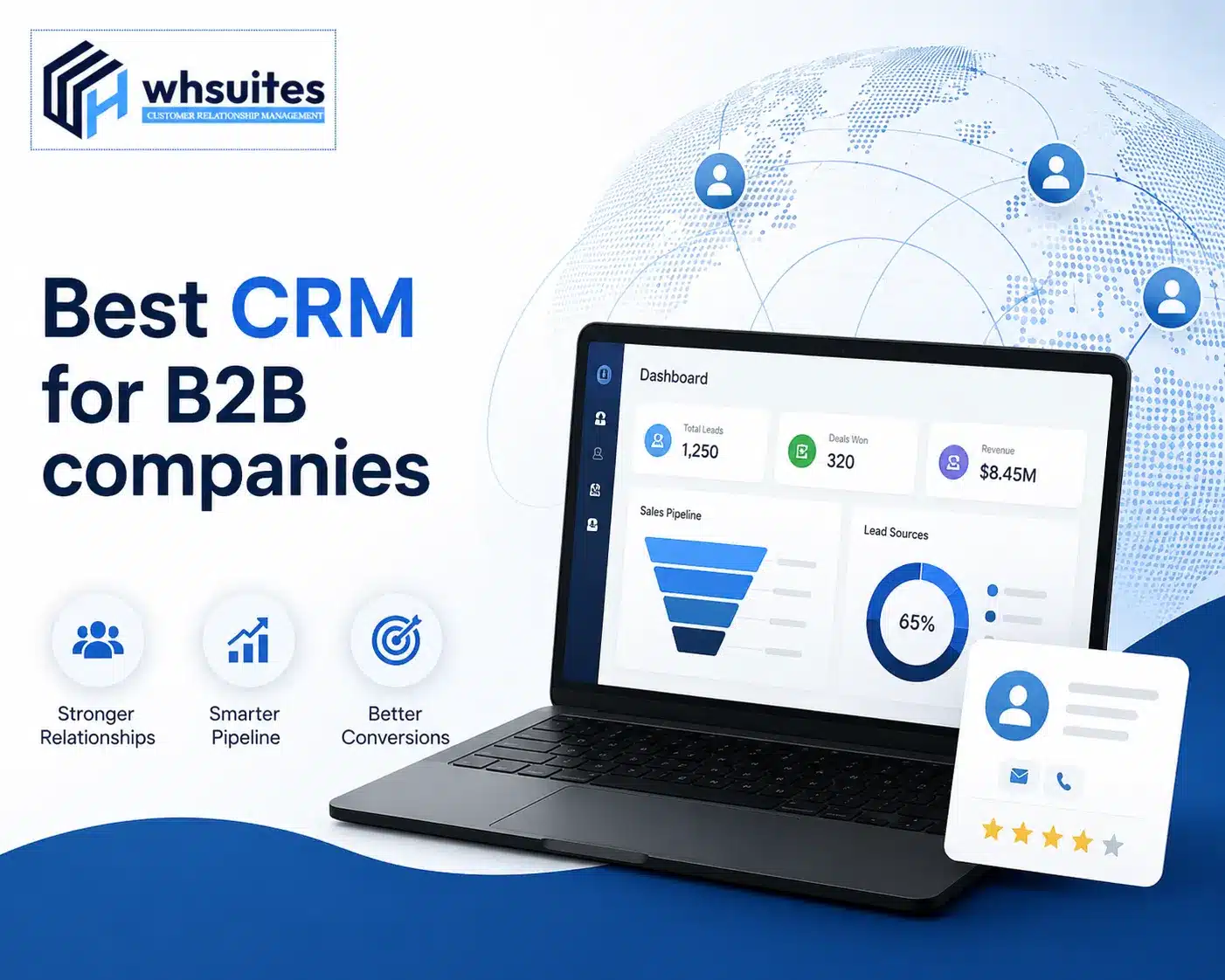
Honestly, the right CRM for a B2B company is always the one that fits exactly the way the business sells and adapts to a longer sales cycle. If you are also looking for a custom CRM built around your unique business processes, WHSuites is going to be a smart choice for B2B companies.
Unlike generic CRM platforms, WHSuites offers you custom built, fully functional CRM for B2B companies that helps you manage complex and lengthy sales cycles more efficiently.
Some Key Features of WHSuites B2B CRM Software
- Centralized customer & lead management
- AI-powered insights and reporting
- Role-based user access and permission
- Email, whatsapp and third-party software integration
- Real-time dashboard and performance analytics
- Document & proposal management
Frequently Asked Questions about CRM Guide for B2B Companies
What’s the exact way CRM simplifies a long B2B sales cycle?
A CRM simplifies a long B2B sales cycle by tracking all the calls, emails, meetings, proposals and evenfollow-upss into one organized platform,
Which feature must be added to B2B CRM software?
A B2B CRM should include lead management, contact management, sales pipeline tracking, workflow automation, follow-up reminders, email integration, reporting & analytics and third-party integration with tools like ERP and marketing platforms.
How can a single CRM improve communication and collaboration between departments?
CRM brings all the customer information and interaction into one centralized platform that makes it accessible to sales, customer support, finance and management teams.
Which types of businesses really need CRM?
A CRM is really helpful for businesses of all sizes that want to manage customer relationships more effectively. It is especially beneficial for B2B companies and SaaS businesses. IT Service providers, manufacturers, healthcare organizations and businesses with long or complex sales cycles.
What things should we consider while choosing a CRM for my B2B business?
When you select CRM, you should evaluate some major things such as ease of use, customization options, scalability, automation capabilities, reporting features, mobile accessibility, customer support and overall cost.
How does WHSuites CRM can identify high-value leads through CRM?
Yes, WHSuites CRM is modern software that helps businesses identify high-value leads by using features like lead scoring, customer segmentation and activity tracking.