Why Pharma Needs CRM for Medical Representative Activity: Step into almost any pharma sales office and you’ll hear the same complaint on repeat – “We don’t have a clue what our MRs are up to in the field.” Sales heads are watching data three days out of date in Excel sheets, MRs are Whatsapping daily call notes nobody’s truly looking at, and by the time you hear that a doctor’s prescribing habits have shifted, weeks too late, the world has already moved on.
Sound like a scenario you know all too well? Unfortunately, this is the day-to-day grind for a vast number of pharma companies, especially the ones rapidly expanding, but still managing their MR operations in the age of pen-and-paper diaries and guesswork via calls. And, as unfair as it sounds, it’s not about your team not trying their best – it’s the lack of a mechanism connecting the dots, which is precisely where a pharma-focused CRM comes in.
The Old Way of Managing MRs Doesn’t Scale
When you think about what a Medical Representative’s average day involves, they call on doctors, chemists and stockists within their given territory, present their products, leave samples and sales aids behind, take down doctor comments, and somehow consolidate all this information to send back to the corporate office.
However, when all this is managed on registers, tour diaries, and a multitude of Excel spreadsheets, the outcomes are somewhat expected – delayed reports, manipulated data, reduced management visibility, and decisions based on obsolete data. Increase the number to 50, 100 or even 500 Medical Representatives distributed across the nation, and what you’re left with is an operation essentially flying blind. That’s the actual cost of not implementing CRM – not the cost of the software but the loss of visibility, accountability, and velocity.
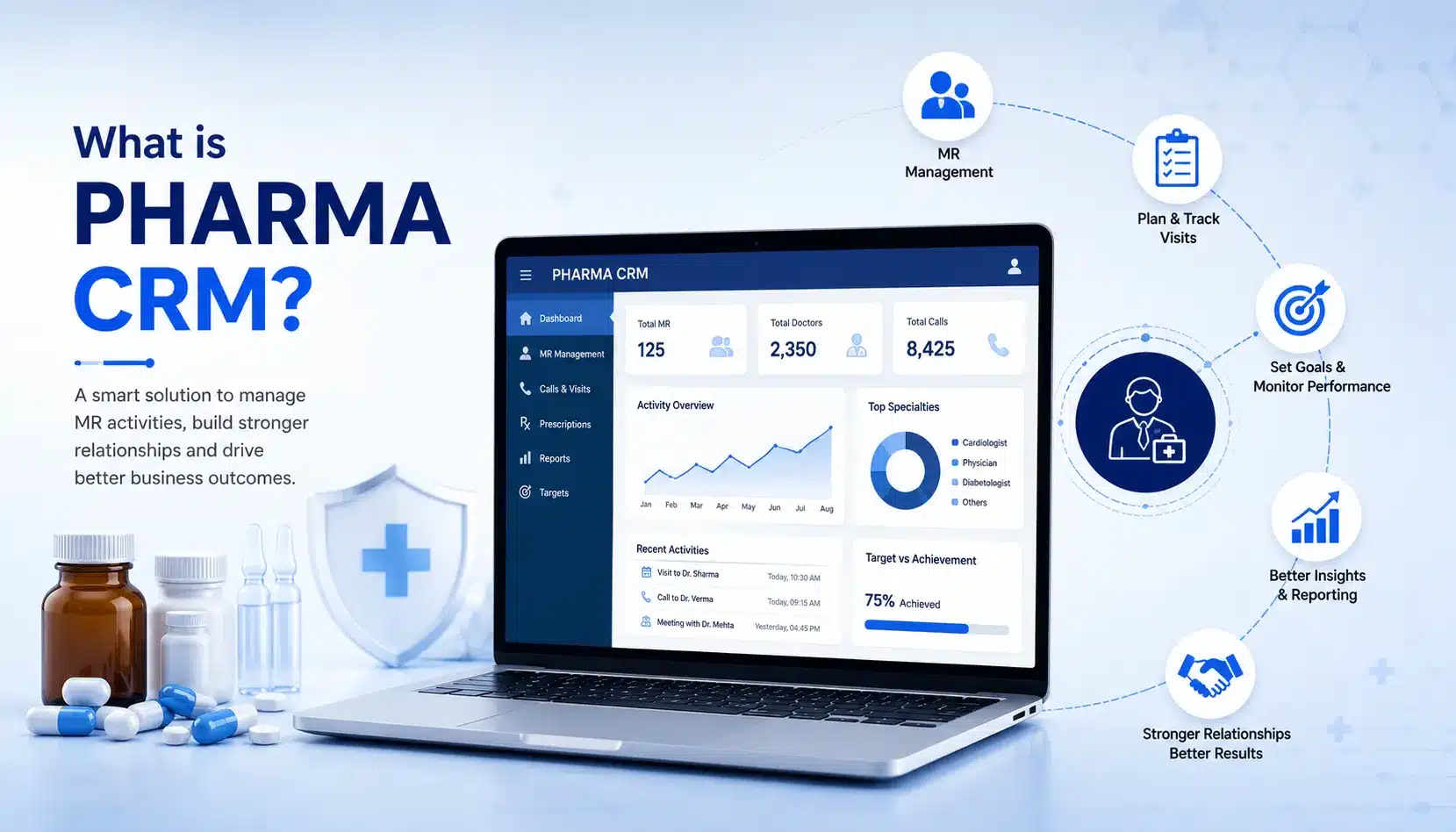
What Exactly Is a Pharma CRM Then?
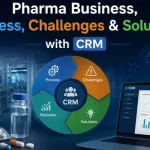
A Pharma CRM is much more than a digital Rolodex. In essence, it’s the operating system for your entire sales force, documenting doctor visits, chemist and stockist calls, samples issued, expenses incurred and daily route plans and then compiling all of that into a live and actionable dashboard for your sales managers. The role of CRM in Pharmaceuticals is important as it provide a single and right source for planning and tracking of the activities.
Systems like WHSuites were specifically developed with this problem in mind – providing pharma companies with a single source of truth for planning, tracking and analysing their field reps’ activities instead of a frantic chase after data across 10 different disparate systems.
Real-Time Field Activity Data
Perhaps the single greatest driver for Pharma CRMs is visibility. Using GPS-based location tracking and immediate call recording, sales managers back in headquarters know exactly which doctor was visited, and when, as soon as the visit occurs. No more languishing until monthly tour diary submission!
Improved Doctor & Chemist Relationships
Pharma sales relies heavily on cultivating and maintaining relationships. While a doctor certainly needs to hear about a particular drug, he or she wants to connect with a sales rep who knows their needs and understands the complexities of their practices. Because a CRM houses complete interaction histories, regardless of an MR’s departure or transfer, the individual who assumes responsibility can hit the ground running by tapping into years of prior, pertinent information.
Smart Beat Planning and Route Optimisation
Any MR will agree that a significant chunk of the day is spent just travelling between one clinic and another. With an appropriate CRM, a doctor’s daily route, called a ‘beat plan ‘, is optimally generated basis doctors’ priorities, geographical clusters, and visit frequencies, thus enabling MRs to concentrate on selling rather than wondering where their next stop is.
Track Samples and Promo Materials
The cost of freebies and promo stocks is high, and given it is a regulated industry like pharmaceuticals, this must also be accounted for. An effective CRM records the exact number, brand, batch number that has been distributed to which doctor on what date, making audits a breeze and putting a halt to the slow but constant drain of these resources, especially when not tracked at all.
Headache-free Compliance
The pharmaceutical industry is the most regulated across sectors. Compliance on issues such as gifting, sampling and doctor engagement falls under the radar of MRs’ activity. An adequate CRM system generates a dated and detailed audit log for each transaction, which makes it easier to respond to regulatory bodies or internal audit without a scramble.
Data you can act on
A sale recorded with a visit or a sample logged in the CRM is actual data that sales managers can work with. Which regions are doing poorly? Which medications seem to be a hot topic among physicians? Who do your Medical Representatives (MRs) require coaching, and who are you looking to reward? Rather than conjecture, your sales leaders have clear reports and dashboards to show them with a few clicks of the mouse.
Greater MR productivity and equal responsibility
That is the piece that goes unnoticed – CRM is not merely a device for management supervision; it indeed makes life simpler for an MR. Call reports can be documented on paper in one minute, as opposed to twenty minutes. Their work may also be simplified by scheduled reminders so that they don’t overlook follow-ups. They gain a formal record of their work rather than relying solely on a manager’s memory at the time of evaluation.
Expenses Management Without the clutter of paper
A medical representative’s travel and meal costs, along with any local conveyance expenditures, could accumulate to generate mounds of paperwork in the case of a large field sales force. Most pharma CRM software programs include expense-tracking features and approval flows, eliminating physical documentation for claims.
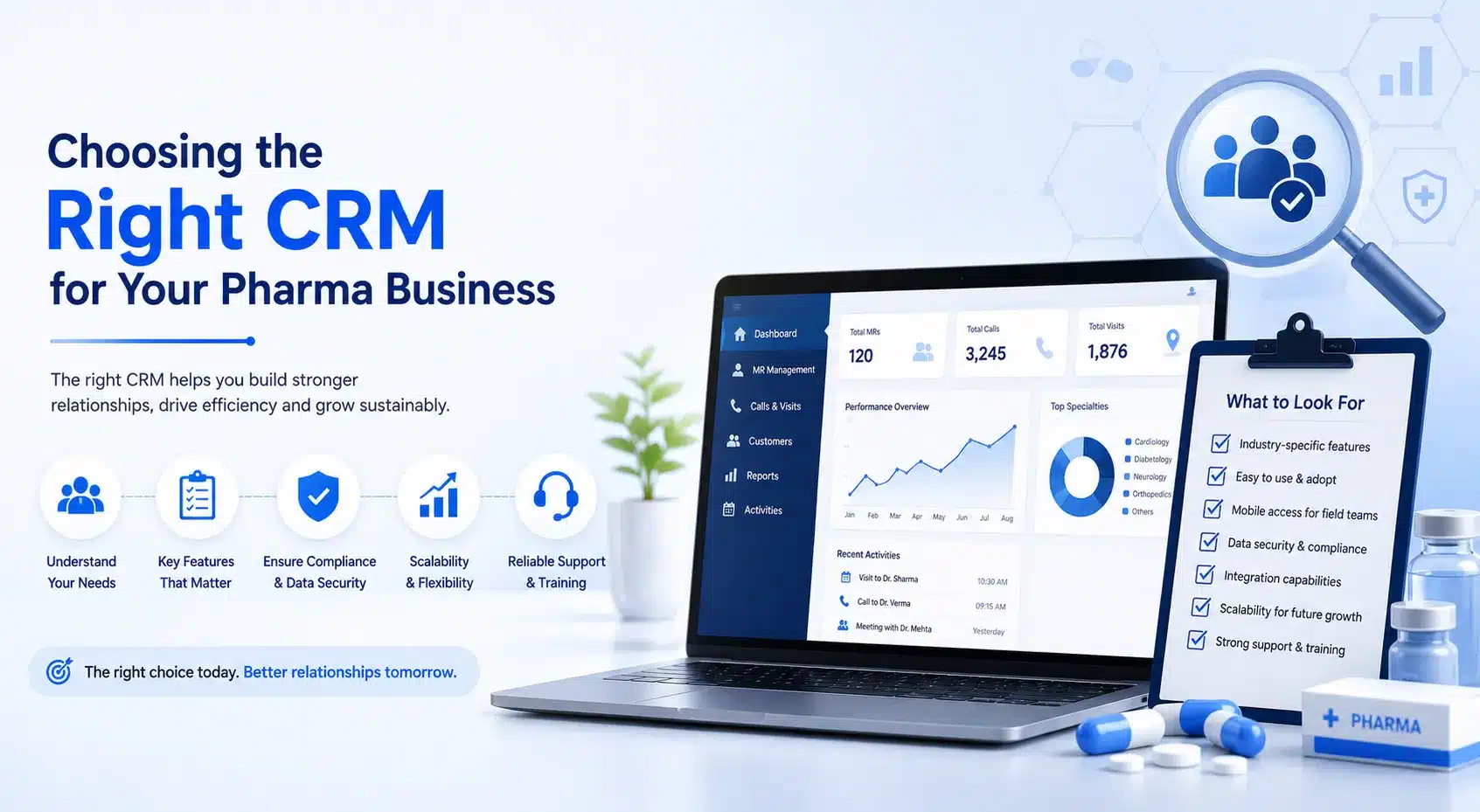
Choosing the Right CRM for Your Pharma Business
Not all CRMs can handle the demands of the pharma industry. Most sales CRM systems cater to the typical B2B pipeline, but MRs knocking on doors with their samples cannot use the same tool. You need an application with a design focused on your workflow: with doctor databases, beat planning, sample management, and a focus on compliance.WH Suites falls squarely in that category.
Get MRs to Actually Use Your CRM
A new CRM is an easy acquisition; the real challenge lies in making it part of your MR’s day-to-day workflow. Those who have filled paper diaries for years won’t start transcribing data into a new application for a while, and you will face more resistance than you would expect. To facilitate this transition: Keep the CRM app as simple as possible. Show MRs the immediate benefits they will gain from using it.
Introduce the CRM gradually with thorough training rather than simply switching off all the paper-based systems at once.
Frequently Asked Questions for the Need for a CRM to Manage MR Activity:
What is a pharma CRM used for?
A CRM in the pharma sector is an application used to schedule, track, and analyse MR activity such as doctor or chemist visits, sample distribution, travel expenses, and the resulting reports, all within one application, eliminating the need for paper diaries or separate spreadsheets.
How can a CRM help MRs become more productive?
By facilitating online reporting of calls, suggesting the best routes for field visits, and sending out automatic notifications about scheduled meetings, a CRM reduces the amount of time MRs spend doing paperwork and helps them spend more time in actual field visits with medical professionals.
Is a CRM only for big pharma companies?
No, it really isn’t. Smaller and medium pharma organisations with even a handful of MRs see benefits almost immediately. The visibility, compliance, and accountability issues that the app exposes are only going to get bigger as the organisation gets bigger; a CRM simply helps keep these small and prevent escalation.
Does a CRM help me with regulatory compliance?
Yes. It ensures every doctor visit, sample given, and expense claimed is logged and timestamped to make reporting compliance codes on gifting and promo much easier.
Will my MRs rebel and refuse to use a CRM App?
Initial resistance can occur with a poor system, or an overly complicated App. But with simple and intuitive systems, where your MRs can see that their efforts are captured fairly in their performance evaluation, usage rates usually improve quickly in just weeks.
How is a Pharma CRM different to an everyday sales CRM?
Everyday sales CRM’s work around a deal pipeline and cannot adequately cope with MR day-to-day operations or cover the requirements of beat planning, chemist & doctor records, sample distribution & stock, and the regulatory compliance requirements specific to the industry. A pharma-focused system does this natively.
Will a CRM monitor MR expenses?
Nearly every pharma CRM has its own expense management module allowing your MRs to submit travel expenses digitally. Managers can then approve these digitally, removing the hassle of physical papers and drastically speeding up expense reimbursements.
How long does it take to roll a CRM out to the entire sales force?
With some training and a bit of overlap between your existing process, most pharma organisations will see high user adoption in 4 to 8 weeks, and some measurable gains in the reporting process, data quality and in 1 to 2 quarters.
The Bottom Line
Your MR activity is likely the biggest contributor to your sales organisation’s overall performance and yet often represents the largest “blind spot” your company has.
The longer your operations are run with paper diaries, spreadsheets and informal tracking, the more information you’re losing, and the less time your reps have to actually be doctors – building relationships and prescribing.
A good CRM doesn’t simply digitise your operations; it offers a level of insight into your sales team that helps keep you compliant, allows you to do more, and gives you the information needed to drive future success. If you’re still operating on pen and paper when it comes to managing your sales reps, it may be time to investigate what a dedicated pharmaceutical CRM solution can do for you.