
In your sales sheet, a dealer enquiry may look like a simple name and phone number. But behind it, there could be your next high-value business partner. This is where CRM helps manufacturers manage dealer & distributor leads. Your sales team can now capture, qualify, follow up, and convert dealers and distributors in a structured way.
In the manufacturing industry, the problem isn’t always generating leads; it is staying on top of every inquiry when sales conversations are happening through calls, emails, WhatsApp, exhibitions, website forms and different members of the sales team.
With the help of a dedicated CRM, you can bring the interactions together and give manufacturers a clear view of who the lead is, what they need, where they are in the sales process process and what action needs to happen next.
Why the Need for a Better Way to Manage Dealer & Distributor Leads for Manufacturers?

To be honest, dealer and distributor sales rarely happen after one conversation. A potential partner may first ask for a product catalogue, then enquire about pricing, discuss minimum order quantities, ask about territory availability and finally negotiate commercial terms before placing an order. If all this is managed manually, it becomes easy to:
- Miss an important follow-up
- Lose track of previous conversations
- Forget which quotation was shared
- Assign the same lead to multiple salespeople
- Leave promising enquiries unattended
- Struggle to identify which leads are actually moving forward
With the help of CRM software, you can turn all this scattered process into a defined sales workflow.
How CRM Helps Manufacturers Manage Dealer & Distributor Leads?
Let’s see how CRM helps manufacturers manage dealer and distributor leads:
-
Capture Dealer Enquiries From Multiple Sources
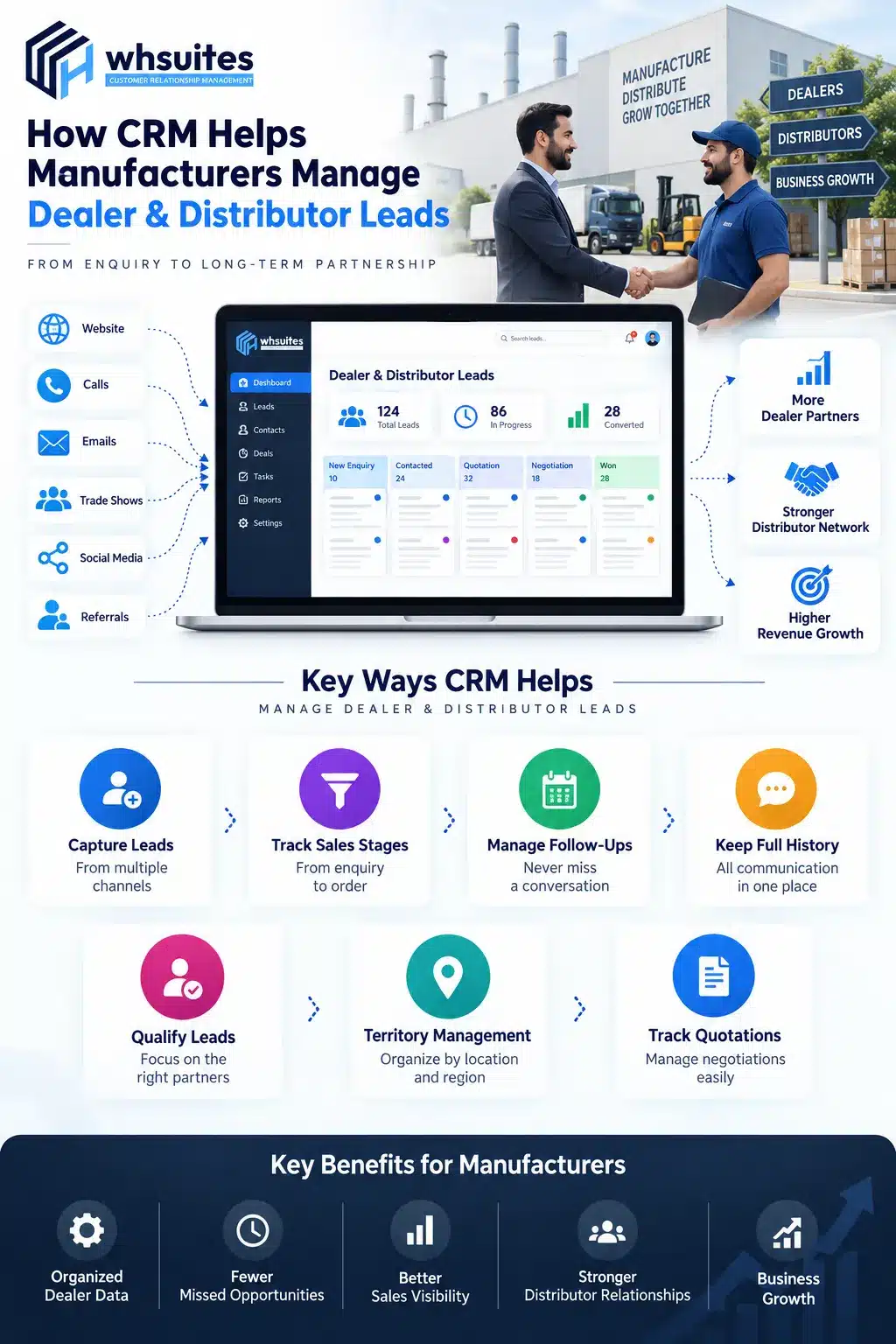
Dealer enquiries often come across multiple channels like website, phone calls, emails, trade shows, referrals, social media or even directly through sales representatives. If you manage all these enquiries separately, it can become messy. This is where CRM brings all these leads into one place and allows your team to record important information such as the dealer’s name, company, location, product requirements and assigned salesperson.
-
Give Every Lead a Clear Sales Page
In the buying journey, every dealer is at a different point. One may have just requested a catalogue while another may be discussing product specifications. With the help of CRM, you can create clear stages like new enquiry, contacted, qualified, product discussion, quotation, negotiation and order confirmed. This makes your manufacturing business sales pipeline much easier to understand.
-
Make Follow-Up Easier to Manage
In B2B manufacturing, one call is not enough to close a dealer or distributor. A potential partner may say, “Send me the product list first” or “I’ll discuss it with my team and get back to you”. After a few days, that follow-up can get forgotten. With the help of CRM, you can easily prevent this by allowing sales teams to schedule follow-ups and record the next action against each lead.
-
Keep Dealer Communication in One History
Without a CRM, the next team partner has to search through emails or ask colleagues what happened previously. With a structured CRM, important interactions can be recorded against the same lead. Your team can easily see previous calls, emails, messages, product requirements, notes from sales representatives, quotations shared, follow-up activities and next steps.
-
Qualify Leads Before Moving Them Forward
Not every dealer inquiry is the right fit for your business. A manufacturer may need to know whether a distributor has the right territory, customer network, product experience or purchasing capacity before investing significant sales time. With the help of CRM, the sales team can record qualification information like business location, existing distribution network, current brands, required products or territory requirements.
-
Manage Dealer Leads Territory-Wise
If you are a manufacturing company that sells across multiple cities, states and even regions, then keeping track of territories can become more challenging. With the help of CRM, you can easily organize dealer leads as per location, territory and salesperson. You can get a clearer view of which territories are generating more enquiries, which salesperson is handling each lead and more related questions.
-
Track Quotation & Negotiation
Sending a quotation doesn’t necessarily mean the deal is done. They may ask for a different quantity, better pricing, revised payment terms or even additional products. That leads to several rounds of discussion before an order is confirmed. CRM really helps manufacturers keep all the commercial conversations organized. The sales team can easily record quotation date, quantity, pricing, products offered, commercial terms, negotiation notes and more.
Key Benefits of CRM for Manufacturers at a Glance
Have a look at some key benefits of CRM for manufacturers:
| CRM Capability | Benefit for Manufacturers |
| Centralized lead database | Keeps dealer information organized |
| Lead assignment | Gives every enquiry clear ownership |
| Follow-up reminders | Reduces missed sales opportunities |
| Sales pipeline | Shows where every lead stands |
| Email integration | Keeps communication connected to leads |
| Task management | Helps sales teams complete next actions |
| Dealer profiles | Provides complete relationship context |
| Lead source tracking | Shows where opportunities originate |
| Reporting dashboards | Improve sales visibility |
| Territory management | Supports regional dealer expansion |
Which CRM is Built to Bring Your Manufacturing Sales Process Together?
If you are a growing manufacturer, then a complicated spreadsheet with more columns is not good for your growth. You need a system where leads, tasks, follow-ups and sales activities can work together. WHSuites CRM for manufacturers is specially designed to help you organize your dealers and distributors in one place.
This centralized CRM gives your team better visibility into what needs attention and when. With unique features like Email integration or task management, your team can easily keep all the important communication and follow-up activities connected to their workflow.
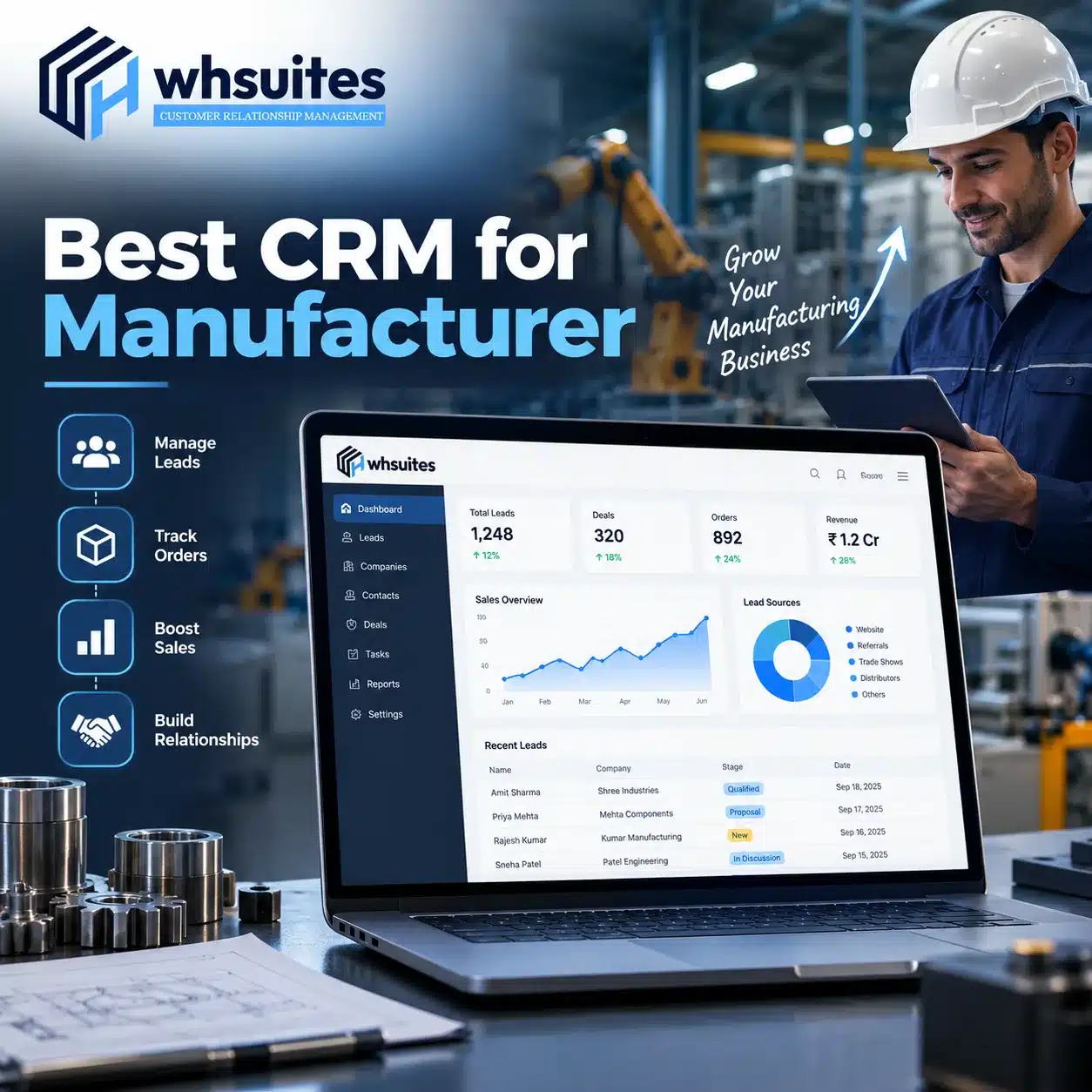
Some of the key features of WHSuites CRM for Manufacturers:
- Email integration for faster dealer communication
- Task management to keep every follow-up moving
- Better visibility for the sales team
- Keep the sales process moving
- Centralized lead management
- Customer & contact management
- Follow-up & activity tracking
- Team collaboration
- Real-time task & activity updates
Frequently Asked Questions about How CRM Helps Manufacturers Manage Dealer & Distributor Leads
Question. Can we also manage dealer leads from different cities or states through CRM?
Answer: Yes, a structured CRM allows manufacturers to organize dealer and distributor leads based on city, state, region, territory and assigned salesperson. With this, you can easily see which leads are coming from different markets and who is handling them.
Question. How can CRM help manufacturers manage dealer communication?
Answer: CRM keeps all the important dealer communication and sales activities organized in one place. Your team can easily record calls, emails, discussions, requirements and even follow-up details to make it easier to continue the conversation without searching through different platforms.
Question. Can CRM also help me remember what I discussed with a distributor?
Answer: Yes, you can easily add notes and interaction details into the distributor’s CRM record. Before the next call, you can easily check previous discussions and product requirements, quotation details and agreed next steps.
Question. Can we also re-engage old dealer enquiries through CRM?
Answer: Yes, with the help of CRM, you can keep all old enquiries in your database instead of letting them disappear after the first conversation.
Question. Can we also manage old leads that were never converted through CRM?
Answer: Yes, you can also manage old leads that never converted. CRM allows you team to review these records later, identify relevant opportunities and schedule new follow-ups rather than starting the lead management process from scratch.
Question. Is CRM really helpful if I already manage my dealer leads in Excel?
Answer: Yes, Excel can be useful for maintaining basic dealer information, but for managing growing dealer information can become difficult. This is where CRM really helps bring all activities into one structured workflow.
Question. What feature should I look for in a CRM for a manufacturer?
Answer: Always look for features that support your actual dealer and distributor sales process like lead management, task management, follow-up reminders, email integration, sales pipeline tracking, lead assignment and reporting.
Question. Can we also know how many dealer enquiries are currently pending through CRM?
Answer: Yes, with the help of CRM, you can get visibility into new, contacted, qualified, quotation pending, negotiation and other active lead stages.